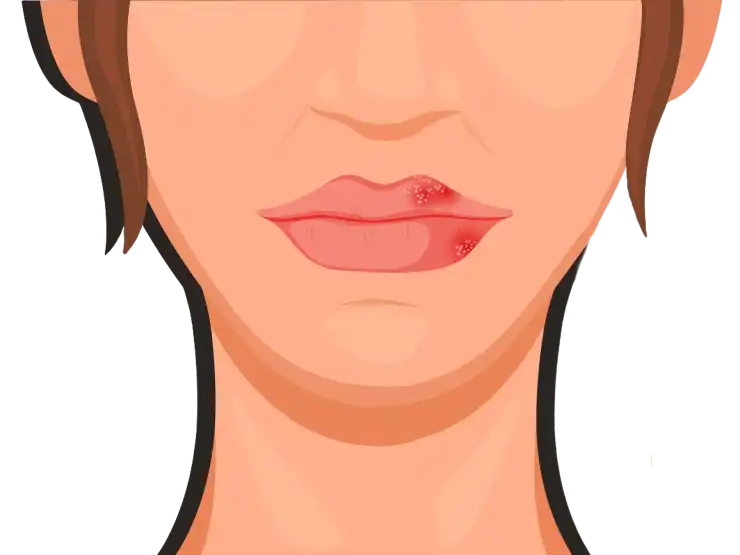
Canker Sore After Dental Work:
Cause, Fix, When to Worry
Last Updated: November 18, 2026
🕒 9 min read

Written by DMD Alexander K.
Doctor of Dental Medicine, 10+ years of clinical experience, focused on preventive dentistry and patient education. Learn more on the About page.
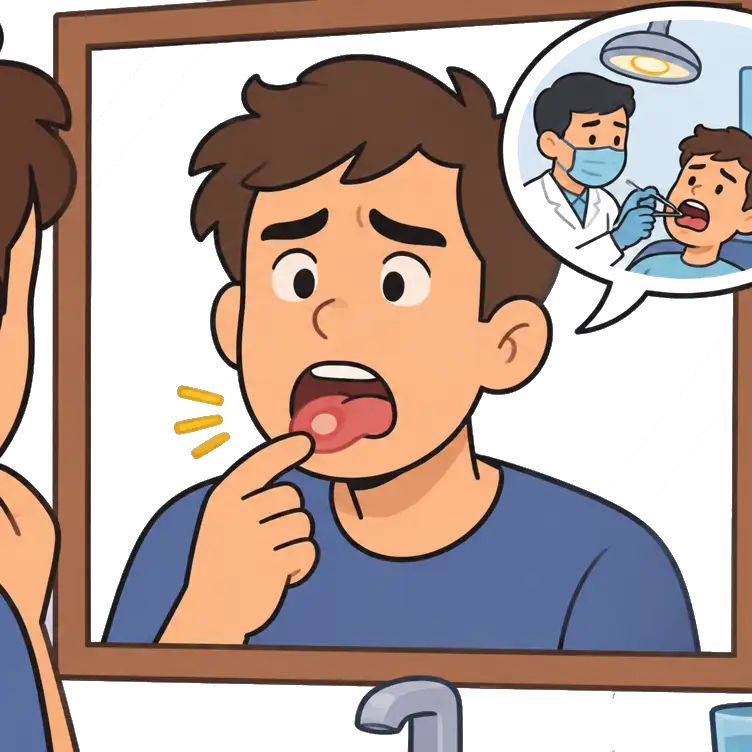
Table of Contents
A Thumbtack in a Sandal 😬
Your dentist said everything looked great. Three days later there’s a white crater on your cheek that feels like a thumbtack in a sandal every time you talk, chew, or exist near it.
Before you fire off an angry email about their sterilization practices, sit down. Nobody gave you anything. This isn’t an infection, and it isn’t a punishment for flossing badly. It’s your own immune system, overreacting to a minor insult, the way it occasionally does for no good reason at all.
🦷 This article is part of our Adult Oral Health Guide Adult Oral Health Guide, where we break down the most common dental problems and how to actually deal with them.
Related Reads 🔗
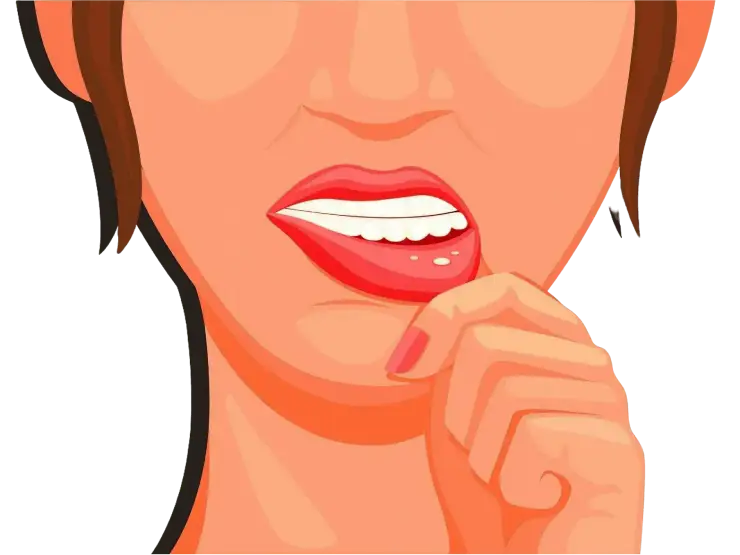
How to Get Rid of Canker Sores Fast and Naturally
Find out effective ways to get rid of canker sores quickly with natural remedies that you can find in your household with expert dental advice.
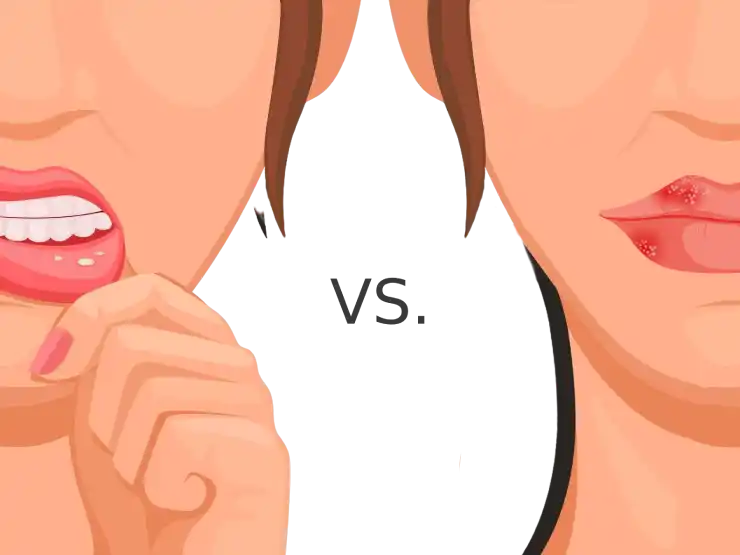
Canker Sores vs Cold Sores – What’s the Difference?
Canker sores vs cold sores explained — symptoms, causes, contagious risk, treatments, and how to tell the difference fast. Simple guide for adults and parents.
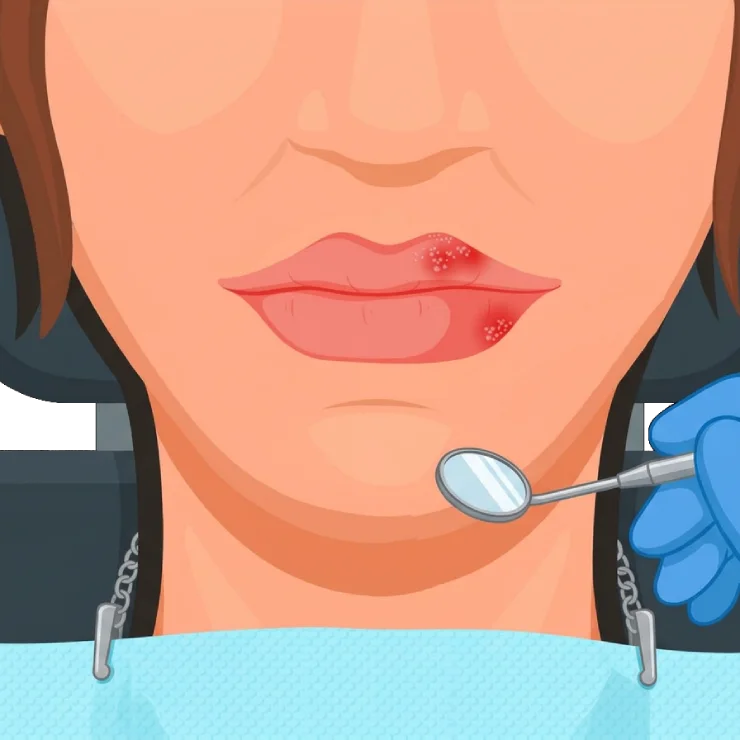
Cold Sore After Dental Work? Why It Happens and What to Do
Cold sore days after the dentist? Usually not the dentist's fault: a stretched lip woke a dormant virus. Why it happens, what helps, when to call.
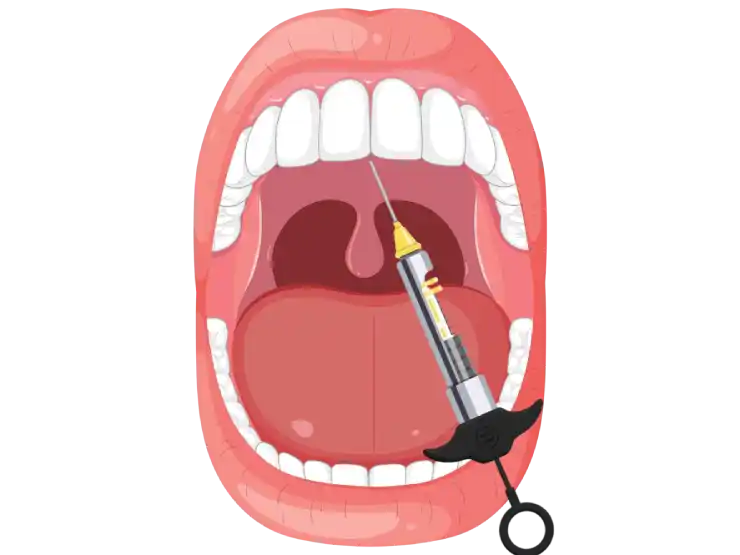
Roof of Mouth Sore After a Dental Injection? Why It Hurts
Not every sore on the palate is a canker sore. Here's why palatal injections leave the roof of your mouth aching — and how long it should last.
Short Answer 🚀
It’s a canker sore — the technical name is an aphthous ulcer, which is a fancier way of saying the exact same annoying crater. Dental work can trigger one in people who are already prone to getting them, because the trigger is usually minor trauma to soft tissue, and a dental visit is basically an hour of minor trauma to soft tissue with a professional’s signature on it. It isn’t an infection. It isn’t contagious. And it is definitely not a verdict on your hygiene. Left alone, a minor one typically heals in 7 to 14 days [1,3].
Why Dental Work Triggers One 🔬
Here’s the mechanism, stripped of the mystery: if you’re the kind of person who’s prone to canker sores, your mucosa has a lower threshold for “this counts as an injury worth overreacting to” than someone who never gets them. Most dental appointments involve retractors holding your cheek open, suction tips bumping around, instruments scraping surfaces they shouldn’t technically touch, and sometimes a sharp edge on a brand-new filling before it’s been smoothed down. None of that is malpractice. It’s just contact.
In one survey of dental students — people who should know better than anyone what’s coming — about 54% of those with a history of recurrent canker sores named physical trauma as their actual trigger [6]. Add in the baseline stress of being a person in a dental chair, which measurably correlates with these ulcers showing up too [1,3,6], and you’ve got the two biggest triggers stacked on top of each other in a single appointment.
Which Procedure Did It? 🦷
A cleaning, filling, or crown: the usual suspects here are a retractor holding your cheek a little too confidently, or a sharp margin on new dental work that hasn’t been polished smooth yet. A sore showing up right at the spot where the instrument sat is not a coincidence.
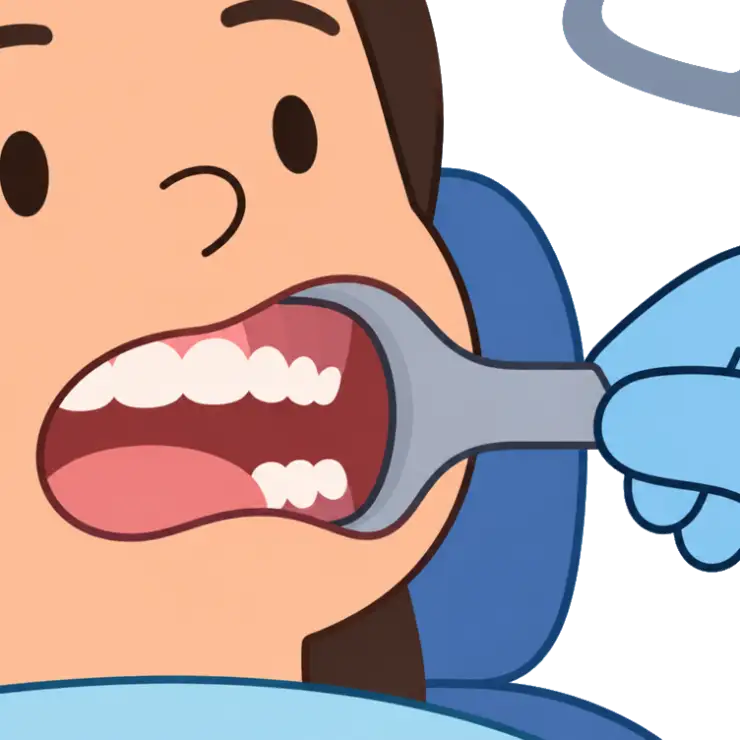
Also it can be a dental mirror instead of a retractor instrument. The main trigger is the physical pressure on the soft tissue.
An extraction or oral surgery: more tissue manipulation, more retraction, more time with your mouth propped open — more opportunity, basically, for the same trigger to fire. This is also the case where people most often confuse a genuine canker sore with something that isn’t one at all, which gets its own full section below.
An injection: the numbing shot itself, particularly into the roof of your mouth, is a specific and separate story — one with its own mechanism involving the needle and the tightly bound tissue up there. If that’s your actual situation, this breakdown of a sore roof of the mouth after a dental injection covers it in more depth than I’m going to here.
Is It Actually a Canker Sore? 🔍
This is the section that actually matters, because “canker sore” has become the default diagnosis people reach for whenever anything white or painful shows up in their mouth, and that’s about to get you treating the wrong problem.
Canker Sore
Round or oval. A yellow-white center with a red halo around it. Sits on tissue that moves — your cheek, your lips, under your tongue — never on tissue bound tightly to bone. Disproportionately painful for something so small. Comes in crops sometimes, not always solo [1,3]. More about it in the canker sores guide .
Cold Sore, Not a Canker Sore
Different animal, different cause, and I’ve written an entire article refusing to let people conflate these two, because they’re not interchangeable. A cold sore starts with a tingle, forms clustered blisters, and typically shows up at the outer lip border rather than inside the cheek. If what you’re actually dealing with is a blister rather than a crater, go read cold sore after dental work instead, or get the general differential in canker sore or cold sore .
A Bite While Numb
If you chewed your own cheek or lip because the anesthetic hadn’t worn off yet and you couldn’t feel yourself doing it, that’s a traumatic ulcer, not an aphthous one. It’s shaped irregularly rather than round, it sits exactly where your teeth met soft tissue, and it heals as soon as the cause — namely, your own teeth — stops reinjuring it [2,3].
A Burn
Numb mouths and hot coffee are a bad combination. A burn presents with sloughing or raw tissue rather than a clean punched-out crater, and the pain and swelling scale with how hot the thing you drank actually was [3].
A Contact or Allergic Reaction
Occasionally a dental material — an impression compound, a latex glove, a rinse — sets off a localized reaction in someone who’s sensitive to it. This tends to show up differently from a classic aphthous ulcer: less of a single clean crater, more of a diffuse irritated patch, often tracking the exact shape of whatever touched it [3].
Thrush
A white patch that wipes off, leaving raw, sometimes bleeding tissue underneath, is a yeast infection, not a canker sore. Canker sores do not wipe off. If yours does, that’s not this article anymore — that’s a conversation with your dentist about an entirely different problem.
A Normal Healing Extraction Socket
This one trips people up constantly, and it’s worth being blunt about: a white or grayish film sitting inside the actual socket where a tooth used to be is very likely just normal healing tissue, not an ulcer and not an infection. An extraction socket is not supposed to look pink and pristine while it heals. If what’s worrying you is specifically inside the socket rather than on your cheek or gum nearby, you’re probably looking at biology doing its job, not a complication.
How Long It Lasts ⏱️
A minor aphthous ulcer — the common kind, under about a centimeter — typically runs its course in 7 to 14 days [1,3]. Major aphthae, which are larger and deeper, can take 4 to 6 weeks and occasionally leave a scar behind [1,3]. Herpetiform ulcers show up as multiple small sores that can merge into something that looks worse than it is [1,3]. If yours is small and solo, expect the short end of that range.
What Actually Helps 🛠️
Keep it simple. A gentle brushing routine with a soft toothbrush, plus saltwater or a bland rinse, is genuinely enough for most minor cases [3]. Skip spicy, acidic, salty, or scalding-hot food and drink while it’s active — you already know this from experience, you’re just looking for permission to stop pretending the hot sauce is fine. An over-the-counter protective gel can shield the sore from friction while it heals, and plain pain relief per the label helps if it’s genuinely bothering you. I’m not giving you doses here — check the label or ask a pharmacist.
If this is a recurring problem for you rather than a one-off, how to get rid of canker sores covers the fuller remedy picture, including the prescription-strength options a dentist or doctor might reach for if over-the-counter measures aren’t cutting it.
Next Time 🔁
Tell your hygienist or dentist, before they start, that you’re prone to these. Ask for gentler retraction. And if you want to actually solve the pattern instead of just treating each flare-up as it comes, start a short trigger log — what you ate, how stressed you were, what procedure you had — because the triggers are often more individual than generic.
If they keep showing up frequently, large, or in odd locations, that’s worth mentioning to a doctor too — recurring, atypical ulcers occasionally point to something nutritional or systemic underneath, and that’s a conversation for a medical workup, not another tube of gel [2,3].
When It’s Not a Canker Sore 🚨
Most of what lands on your cheek after a dental visit is exactly what it looks like: annoying, benign, and temporary. Get it actually looked at if any of the following apply instead:
It hasn’t healed after about 2 weeks. It’s growing rather than shrinking. It feels hard or indurated instead of soft. It’s painless despite looking significant, which is backwards from how a normal canker sore behaves. It’s bleeding on its own. There’s a patch nearby that won’t wipe off. You’ve got a fever, pus, or spreading swelling. Or the pain is getting worse several days after an extraction rather than easing — that specific pattern is not a canker sore’s job, it’s your dentist’s.
Bottom Line 🎯
A single sore showing up where a retractor sat, a filling got polished, or your cheek got stretched for an hour is almost always a traumatic or trauma-triggered canker sore, and it should settle within one to two weeks without fanfare. It’s not an infection you caught at the office, and it’s not evidence you’ve been neglecting your teeth. Anything that persists past three weeks, turns hard, or shows up with symptoms that don’t belong to a canker sore’s usual behavior has earned itself an actual look, not another guess.
Sources
- [1] Dawson T. Ulcers: causes, identification and management. *Dental Nursing*. 2012;8(12):784-786. DOI: 10.12968/denn.2012.8.12.784
- [2] Hullah EA. Oral ulceration: aetiology, diagnosis and treatment. *Dental Nursing*. 2014;10(9):507-512. DOI: 10.12968/denn.2014.10.9.507
- [3] Bilodeau EA, Lalla RV. Recurrent oral ulceration: Etiology, classification, management, and diagnostic algorithm. *Periodontology 2000*. 2019;80(1):49-60. DOI: 10.1111/prd.12262
- [4] Antoon JW, Miller RL. Aphthous ulcers — a review of the literature on etiology, pathogenesis, diagnosis, and treatment. *The Journal of the American Dental Association*. 1980;101(5):803-808. DOI: 10.14219/jada.archive.1980.0424
- [5] Scully C. Oral ulceration: a new and unusual complication. *British Dental Journal*. 2002;192(3):139-140. DOI: 10.1038/sj.bdj.4801315a
- [6] Taheri MH, Eshraqi AM, Anwari A, Stanikzai AM. Prevalence of recurrent aphthous ulcers among dentistry students in Kabul, Afghanistan: A questionnaire-based study. *Clinical, Cosmetic and Investigational Dentistry*. 2022;14:275-279. DOI: 10.2147/ccide.s378171
- [7] Hellyer P. Sodium hypochlorite (NaOCl) accidents. *British Dental Journal*. 2025;239(3):185. DOI: 10.1038/s41415-025-9055-y
- [8] Al-Aizari NA, Al-Shamiri HM, AlShehri BK, et al. Evidence-based recommendations for the treatment of recurrent aphthous stomatitis: insights from an umbrella review. *Journal of Dermatological Treatment*. 2026;37(1). DOI: 10.1080/09546634.2026.2622245
FAQ: Canker Sore After Dental Work Real Answers❓
Is it normal to get a canker sore after dental work?
What causes canker sores after a tooth extraction?
Can a dental cleaning cause a canker sore?
Are canker sores caused by poor hygiene?
What gets mistaken for a canker sore?
How long does it last, and when should I worry?
Is it contagious, and can my dentist give it to me?
Can I prevent one before my next appointment?
About the Author: DMD Alexander K.
Doctor of Dental Medicine with clinical experience treating adults and children. This site focuses on practical prevention, symptom education, and helping patients make informed decisions.
Learn more on the About page.