Cold Sore After Dental Work? Why It Happens and What to Do
Last Updated: November 1, 2026
🕒 11 min read

Written by DMD Alexander K.
Doctor of Dental Medicine, 10+ years of clinical experience, focused on preventive dentistry and patient education. Learn more on the About page.
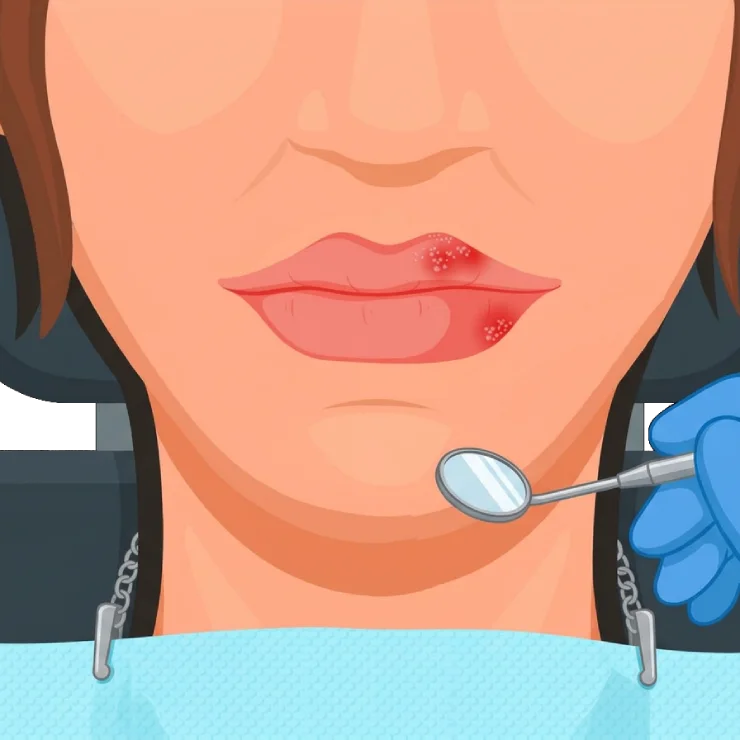
Table of Contents
You Went in for a Filling 😬
You went in for a filling. You came out with a filling and a blister on your lip. Naturally, you blame the dentist.
I’m going to stop you right there, because you’re about to accuse the wrong suspect — which, in my experience, is what everyone does first. Nobody gave you a virus at the dental office. You already had it. You’ve had it for years, maybe since you were a toddler sharing a juice box you shouldn’t have shared. It’s been sitting quietly in a nerve near your jaw, waiting for an excuse. Yesterday’s hour in the chair, mouth cranked open, needle near your lip, was exactly the excuse it wanted.
That’s not a theory. That’s what happened to roughly one in five people with a history of cold sores in an actual clinical trial — a blister, within a week of routine dental work, no new infection required [1].
🦷 This article is part of our Adult Oral Health Guide Adult Oral Health Guide, where we break down the most common dental problems and how to actually deal with them.
Related Reads 🔗
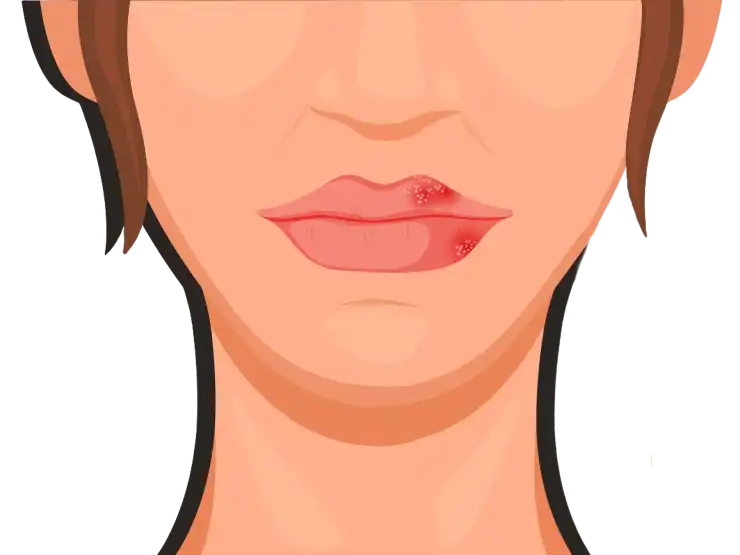
Cold Sores Inside the Mouth: Why Acting Fast Matters
Cold sores have triggers. If you act fast, you can reduce their severity. Learn when they’re contagious, and why early treatment actually matters.
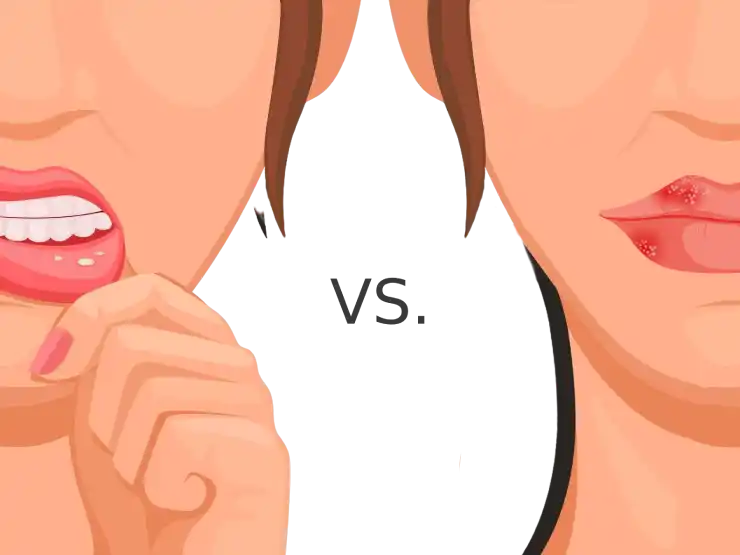
Canker Sores vs Cold Sores – What’s the Difference?
Canker sores vs cold sores explained — symptoms, causes, contagious risk, treatments, and how to tell the difference fast. Simple guide for adults and parents.
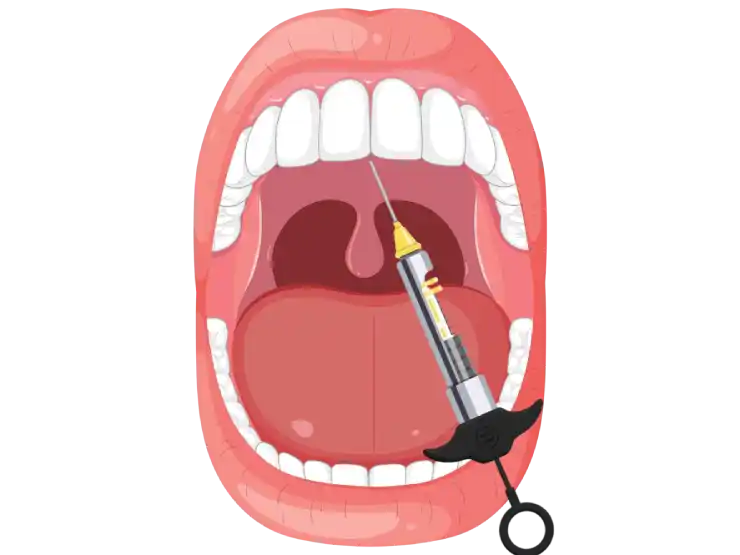
Roof of Mouth Sore After a Dental Injection? Why It Hurts
Not every sore on the palate is a canker sore. Here's why palatal injections leave the roof of your mouth aching — and how long it should last.
Can't Open Your Mouth After Dental Work or a Numbing Shot
Mouth won't open fully after the dentist or a numbing shot? Usually a sore muscle, not a lock. Normal timeline, home fixes, red flags to call about.
Short Answer 🚀
Dental work can trigger a cold sore in people who already carry the virus — which, statistically, is most adults walking around with opinions about who’s to blame. The dentist didn’t hand you an infection. They woke one up that was already living in you, rent-free, for years. This is reactivation, not a new case, and the distinction matters more than you’d think, because one of these is a dental malpractice story and the other is just biology being petty.
What’s Actually Happening 🔬
Here’s the part where I explain the body doing something it’s genuinely bad at: staying asleep.
The virus in question is herpes simplex type 1, and you almost certainly have it — somewhere around 90% of people do by the time they hit 60, most without a clue [3]. After you first picked it up, likely decades ago and likely from something as mundane as a kiss or a shared cup, it didn’t leave. It traveled up a nerve and set up permanent residence in a cluster of nerve cells near your jaw, called the trigeminal ganglion. Lifelong tenancy. No eviction clause [3].
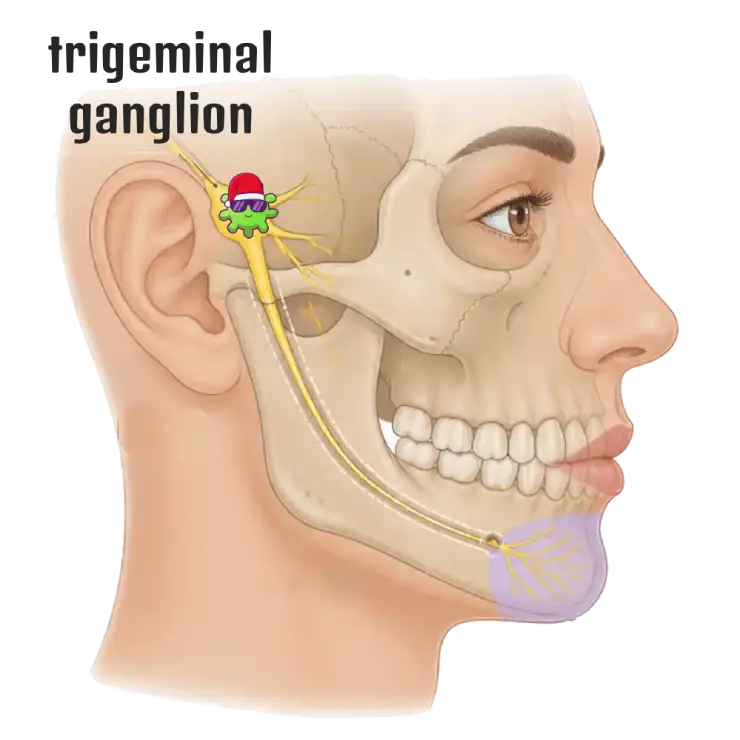
Virus just sits there, waiting to deliver its present to the host when triggered
Most of the time it just sits there, quiet, doing nothing. Only about a third of infected people ever get a visible flare-up at all [3]. But it doesn’t stay quiet forever, and it has a short list of things that wake it up: stress, sun, fever, and — the one you just experienced — physical trauma to the exact nerve it’s hiding in [3].
A dental appointment is, biologically speaking, a greatest-hits compilation of everything that provokes it. You get a needle near the branch of the trigeminal nerve where the virus lives. You get an hour of your lips and cheeks stretched and retracted into shapes they don’t usually hold. And you get the background stress of being a person in a dental chair, which — whatever you tell yourself — your nervous system registers as a threat. Stress alone measurably increases viral shedding; it’s not just in your head, it’s in your cortisol [3]. Put mechanical nerve trauma and stress in the same hour, and you’ve built the exact trigger the virus is designed to respond to [4].
The timing backs this up without ambiguity. In one series of extraction patients, lesions showed up 2-3 days after the procedure, and five out of seven patients said this flare-up actually hit harder than their usual ones did [2]. And here’s the detail that should annoy you most: it doesn’t seem to matter how invasive the procedure was. In the largest trial on this, routine restorative work, root canals, cleanings and orthodontic adjustments triggered reactivation in nearly one in five at-risk patients — statistically indistinguishable from the extraction group [1]. Your “minor filling” was apparently plenty of provocation.
I’ll also tell you what the data does not support, because half-truths are how people end up suing their dentist over bad luck: one large audit of 3,818 extractions recorded zero HSV flares, and a separate study using PCR on third-molar surgery patients found the virus active in only 4.2% of them [2]. The true odds of this happening to any one person are genuinely unclear. What’s not unclear is that when it does happen, it’s reactivation, not transmission — and your dentist’s equipment had nothing to do with it.
Cold Sore, Canker Sore, or Just a Stretched Lip? 🔍
People conflate these three constantly, and I’d like to un-conflate them before you treat the wrong thing with the wrong product for two weeks.
A cold sore (herpes labialis) shows up at the vermilion border — the line where your lip meets regular skin, outside the mouth. It usually announces itself first: a tingle, burn, or itch in the same spot 46-60% of the time, roughly a day before you see anything [4,5]. Then come grouped blisters, which break, weep, crust over, and heal — without scarring — over one to two weeks [4,5]. If you felt a warning tingle before anything appeared, that’s your biggest clue it’s herpes and not something else.
A canker sore is a different animal entirely — not viral, not contagious, and it lives inside the cheek or under the tongue rather than on the outer lip border. If you’re trying to sort out which one you’re actually dealing with, this breakdown of canker sore versus cold sore covers the differences in more detail than I’m going to bother with here. And if a canker sore turns out to be the actual verdict, here’s how to deal with canker sores specifically .
Then there’s the complication that makes dental patients panic unnecessarily: herpes can also show up inside the mouth — on the hard palate or the gum tissue bound tightly to bone — and it can follow a dental injection specifically. If what’s bothering you is a sore spot on the roof of your mouth after a numbing shot rather than a lip blister, that’s covered separately in this article on a sore roof of the mouth after a dental injection , which walks through that specific presentation. For the general case of herpes turning up inside the mouth rather than on the lip, this guide to cold sores inside the mouth covers it in full.
The one thing that is not on this list: a cracked, dry corner of the mouth from an hour of being propped open with a mouth prop is not a cold sore. It’s irritation. It doesn’t blister, it doesn’t crust the same way, and lip balm fixes it in a day or two. Don’t let one bad hour convince you that you’re now a lifelong cold sore person if the evidence doesn’t actually support that.
The Timeline ⏱️
If it is herpes, here’s the schedule it runs on, assuming you don’t intervene:
Tingle, burn, or itch at the site — the prodrome, in roughly half of cases [4,5]. Then, within about a day, grouped blisters appear at the lip border. The blisters rupture and weep. A crust forms over the open area. The crust falls away, and the skin underneath heals clean, with no scarring, usually within 7-14 days total [4,5].
That’s the uncomplicated version. The complicated version — which happened in two of seven patients in one dental-trauma series — involved lesions spreading well beyond the lip to the cheek, nose and chin, with fever and swollen lymph nodes, serious enough to require hospitalization and IV antiviral treatment [2]. That is not the typical outcome. It is the outcome that should make you stop treating “it’s just a cold sore” as an automatic dismissal.
What Actually Helps 🛠️
The single biggest lever you have is timing, and most people pull it too late.
Start treatment at the first tingle, not after the blister shows up. Antivirals work by interrupting viral replication while it’s still ramping up — once the blister has fully formed, you’ve largely missed the window where treatment meaningfully shortens anything [4,5]. This is the dental equivalent of calling the fire department when you smell smoke instead of after the couch is already on fire.
From there, your options sort into two tiers. Over-the-counter topical creams are available without a prescription and work best started early, at the tingle or redness stage — ask your pharmacist which one fits your situation [4,6]. Prescription antivirals, taken as pills rather than cream, work better for people whose flares are frequent, severe, or unusually widespread, and a doctor or dentist needs to write that prescription [4,7]. I’m not giving you doses here — that’s between you and whoever’s prescribing it, and self-dosing antivirals off something you read on a dental blog is a genuinely bad idea.
Supportive care, while you wait it out: stay hydrated, use an over-the-counter pain reliever per the label, skip acidic, spicy, or carbonated foods and anything scalding hot, and dab topical products on rather than rubbing them in [5]. Don’t pick at it. Don’t pop it. You’re not doing yourself a favor, you’re doing the virus a favor by spreading infectious fluid to new skin.
Is It Contagious, and What About Your Dentist? 🧤
Yes. An active lesion is actively contagious, and the fluid inside those blisters is not a small viral load — we’re talking up to a million infectious particles per milliliter [4]. So: wash your hands often, don’t touch your eyes, don’t share drinks, cups, or towels, don’t kiss anyone, and skip contact lenses until it’s resolved [5]. Herpes in the eye is a genuinely serious problem, not a minor inconvenience, and it’s one dentists and hygienists worry about occupationally for exactly this reason [4].
As for your next dental appointment: tell them. Every time. About a third of infected people have recurrences at all, and dental treatment is the single most commonly blamed trigger among people who can point to one — 89% of patients who named a trauma trigger specifically named dental treatment [4]. That’s not a coincidence your dentist wants to discover after the fact. Elective treatment is usually postponed until an active lesion has fully healed, partly for your comfort and partly because pulling a tooth during an active flare carries its own specific complication risk [4]. Dental staff with an active lesion of their own shouldn’t be treating you either, for the same reason in reverse [4].
Next Time 🔁
If this is now a known pattern for you, you have leverage you didn’t have before this happened. Three things to actually do with it:
Tell your dentist, every visit, before the appointment — not after you notice a tingle in the chair. Ask whether a short preventive course of antiviral medication makes sense before your next long or invasive procedure. In the trial that studied this directly, a short antiviral course around the appointment cut clinical flare-ups nearly in half compared to no prevention at all [1]. Put plain lip balm or sunscreen on your lips before the appointment, since UV exposure is its own separate trigger and dental offices are, inexplicably, often very bright [4,5].
One honest caveat, because I don’t sell false certainty: the evidence for preventive antivirals isn’t uniformly rock-solid across every regimen studied — some short courses showed a clear benefit, others didn’t reach statistical significance [8]. This is a conversation to have with whoever’s treating you, not a guarantee I’m handing you for free.
When to Call 🚨
Most of this resolves on its own, on its own schedule, whether you fuss over it or not. Call your dentist or doctor if any of the following show up instead:
It hasn’t healed after about two weeks. It’s spreading well beyond the original spot rather than staying contained. It’s near your eye — that one’s urgent, not wait-and-see. You have a weakened immune system from a medical condition or treatment, which changes the entire risk calculation. Or this is happening to you frequently enough that “just put cream on it” has stopped being an acceptable long-term plan.
And if what’s actually bothering you isn’t the blister itself but a jaw that won’t open properly after the same long appointment, that’s a different problem with its own article — covered in what a jaw that won’t open after dental work usually means , which is one of several other things a long dental visit can do to your mouth besides wake up a dormant virus.
Bottom Line 🎯
You didn’t catch anything at the dentist. You woke something up that was already living there, and the appointment — the needle, the stretching, the stress of the whole ordeal — was just the trigger it was waiting for. It’s self-limiting, it responds well to antivirals started early, and it’s genuinely preventable at your next visit if you say something about it before you’re sitting in the chair again.
Diagnosis: not malpractice. Just a virus with terrible timing.
Sources
- [1] Miller CS, Cunningham LL, Lindroth JE, Avdiushko SA. The efficacy of valacyclovir in preventing recurrent herpes simplex virus infections associated with dental procedures. *The Journal of the American Dental Association*. 2004;135(9):1311-1318. DOI: 10.14219/jada.archive.2004.0407
- [2] El Hayderi L, Raty L, Failla V, Caucanas M, Paurobally D, Nikkels AF. Severe herpes simplex virus type-I infections after dental procedures. *Medicina Oral Patologia Oral y Cirugia Bucal*. 2011;16(1):e15-e18. DOI: 10.4317/medoral.16.e15
- [3] Perng GC, Jones C. Towards an understanding of the herpes simplex virus type 1 latency-reactivation cycle. *Interdisciplinary Perspectives on Infectious Diseases*. 2010;2010:1-18. DOI: 10.1155/2010/262415
- [4] Lewis MAO. Herpes simplex virus: an occupational hazard in dentistry. *International Dental Journal*. 2004;54(2):103-111. DOI: 10.1111/j.1875-595x.2004.tb00263.x
- [5] Siegel MA. Diagnosis and management of recurrent herpes simplex infections. *The Journal of the American Dental Association*. 2002;133(9):1245-1249. DOI: 10.14219/jada.archive.2002.0366
- [6] Balasubramaniam R, Kuperstein AS, Stoopler ET. Update on oral herpes virus infections. *Dental Clinics of North America*. 2014;58(2):265-280. DOI: 10.1016/j.cden.2013.12.001
- [7] Chen F, Xu H, Liu J, et al. Efficacy and safety of nucleoside antiviral drugs for treatment of recurrent herpes labialis: a systematic review and meta-analysis. *Journal of Oral Pathology & Medicine*. 2017;46(8):561-568. DOI: 10.1111/jop.12534
- [8] Chi CC, Wang SH, Delamere FM, et al. Interventions for prevention of herpes simplex labialis (cold sores on the lips). *Cochrane Database of Systematic Reviews*. 2015. DOI: 10.1002/14651858.cd010095.pub2
- [9] Rahimi H, Mara T, Costella J, Speechley M, Bohay R. Effectiveness of antiviral agents for the prevention of recurrent herpes labialis: a systematic review and meta-analysis. *Oral Surgery, Oral Medicine, Oral Pathology and Oral Radiology*. 2012;113(5):618-627. DOI: 10.1016/j.oooo.2011.10.010
- [10] Gilbert S, McBurney E. Use of valacyclovir for herpes simplex virus-1 (HSV-1) prophylaxis after facial resurfacing: a randomized clinical trial of dosing regimens. *Dermatologic Surgery*. 2000;26(1):50-54. DOI: 10.1046/j.1524-4725.2000.99166.x
FAQ: Cold Sore After Dental Work Real Answers❓
Can dental work cause a cold sore?
Did my dentist give me the cold sore?
How soon after dental work does it show up?
Cold sore or canker sore after dental work?
Can I go to the dentist with a cold sore?
How long does it last, and how do I heal it faster?
Can I prevent one before my next visit?
Is it contagious?
About the Author: DMD Alexander K.
Doctor of Dental Medicine with clinical experience treating adults and children. This site focuses on practical prevention, symptom education, and helping patients make informed decisions.
Learn more on the About page.