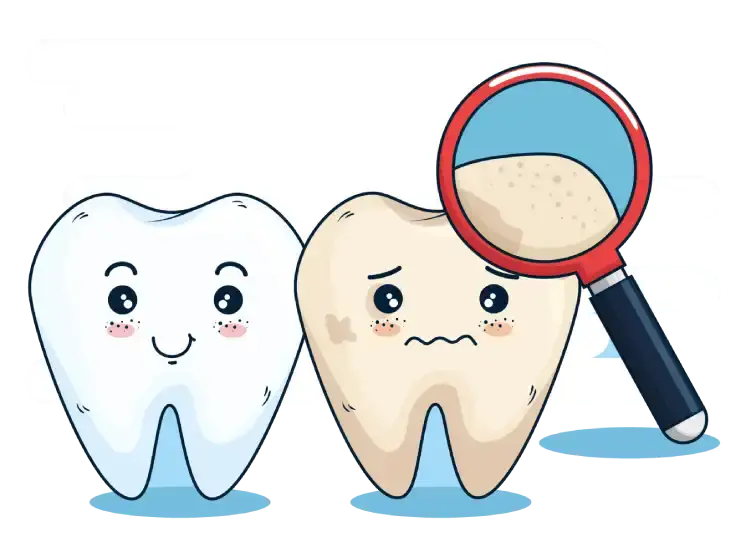
Why are my teeth yellow when I brush them everyday?
Last Updated: April 1, 2026
🕒 11 min read

Written by DMD Alexander K.
Doctor of Dental Medicine, 10+ years of clinical experience, focused on preventive dentistry and patient education. Learn more on the About page.
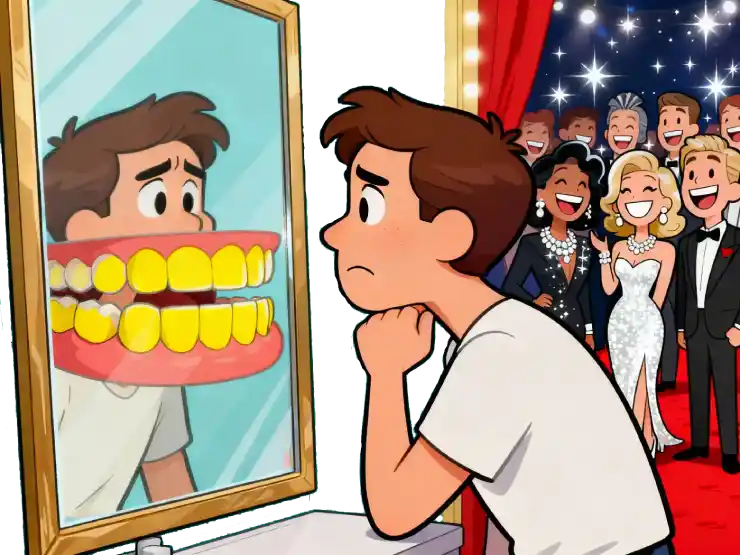
Table of Contents
The short answer: brushing removes plaque, not color 🧠
You brush every day. Your teeth are still yellow.
That’s not a contradiction. That’s biology.
Brushing removes: plaque, food debris, surface bacteria.
Brushing does not remove: your natural tooth color, dentin shade, or genetic anatomy.
You’re not failing at hygiene.
You’re failing at having unrealistic expectations about what a toothbrush can do.
Why your teeth are yellow when you brush regularly
You look at yourself in the mirror.
Sunlight hits your smile.
Your teeth don’t look white — they look… yellow.
Suddenly your brain runs a highlight reel: red carpet smiles, glowing influencers, toothpaste ads that promise “3 shades whiter in 5 days.”
And without realizing it, you start to feel… unclean. Like you forgot to wash your hair. Like your shirt is dirty. Like this is somehow your fault.
It’s not.
Yellow teeth are not a hygiene failure. Not always, at least.
You clicked a title containing the part “…when I brush them every day” — and honestly, that already puts you ahead of a surprising number of people. 👏
If you’re brushing daily, you’re doing the right thing.
But society quietly replaced healthy with white. And those two are not the same.
You can have naturally yellow and perfectly healthy teeth.
You can also have bright white teeth hiding cavities, gum inflammation, or early damage.
Color is cosmetic. Health is biological. Big difference.
So before you start blaming yourself, understand this:
Teeth are not bathroom tiles. You don’t bleach them to measure cleanliness.
Better measurements of dental success:
- How many teeth you still have?
- How many painful dental emergencies you’ve avoided?
- How much money you saved on dental bills?
- Whether your gums bleed?
But they do sometimes, and that’s fine.
Still, it’s a call for action, don’t wait for it to go away by itself — Why Do My Gums Bleed When I Brush My Teeth - Whether cold water hurts?
That happens too.
What’s important here is the cause — Why Does My Tooth Hurt on Cold Water
Not the shade chart.
Why teeth are yellow: natural color vs. added yellowing 🟡
Let’s start with the uncomfortable truth:
Your teeth may be yellow because… that’s their natural color.
Teeth are made of layers.
The outer layer is enamel — the hardest substance in the human body.
Underneath sits dentin — softer, more elastic, and naturally yellowish.
Enamel and dentin are a team.
Enamel protects.
Dentin supports.
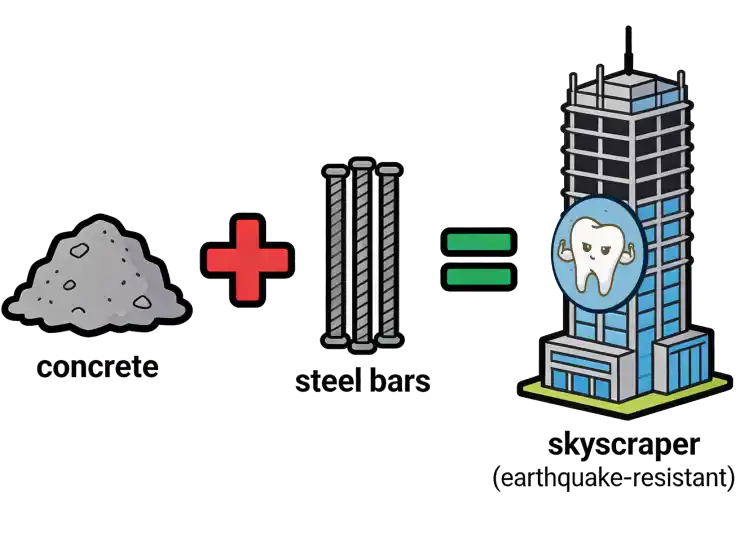
Think armored concrete on some skyscraper:
- Enamel = concrete shell
- Dentin = steel reinforcement
Concrete alone cracks.
Steel alone bends.
Together? Strong and functional, without each other can’t survive the earthquakes (chewing).
Here’s the catch: enamel is translucent.
Not fully white. Not opaque. More like frosted glass.
That means the color you see mostly comes from the dentin underneath.
And there can be 50 shades of yellow in dentin — same as with eye color, hair color, or skin tone.
Thinner enamel → more dentin visible → more yellow tone.
Thicker enamel → less dentin visible → whiter appearance.
This is genetics. Not brushing technique.
Nature prioritized:
- durability
- shock absorption
- longevity
It did not prioritize “Hollywood white.”
And here’s the twist most people don’t expect:
Stronger, well-mineralized teeth can actually look more yellow.
That deeper color often means denser dentin.
Which is like having stronger bones. Not a defect — an advantage.
So if your teeth are slightly yellow but healthy?
You’re not losing. You’re just not filtered.
🟡 Surface stains: the causes you can actually do something about
Now let’s separate natural color from added yellowing.
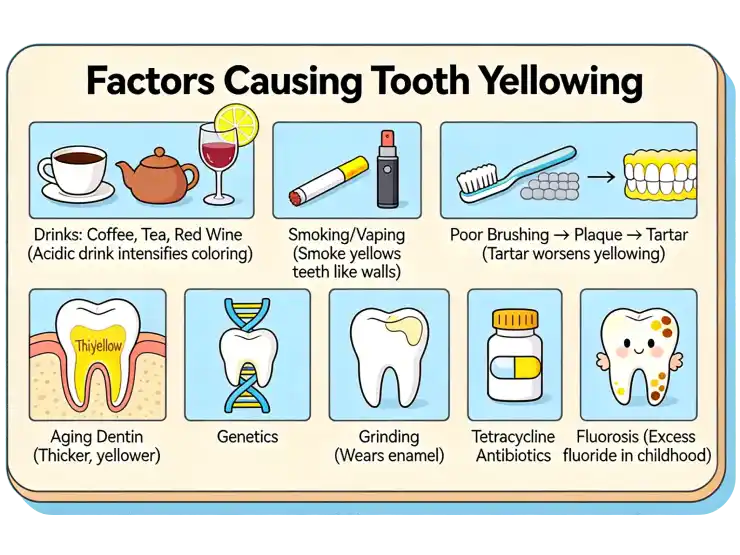
Your teeth can appear more yellow due to:
- Drinks: Coffee ☕, tea (especially black tea), red wine 🍷 → put acidic drink before drinking one of those, the coloring gets more intense
- Smoking or vaping 🚬 → you know how smoke can turn white walls inside of your house yellow? Same with teeth.
- Poor brushing technique (or no brushing at all) → Plaque buildup → Tartar accumulation → Tartar is even more absorbent of stains than enamel, so it can make yellowing worse.
- Aging (enamel thins over time, dentin gets thicker and yellower)
- Genetics (it’s discussed above)
- Grinding (wears enamel down)
- Certain medications (tetracycline antibiotics)
- Fluorosis — excessive fluoride during tooth development in early childhood can cause yellow or brown spots.
- Trauma to a tooth (inner blood supply disrupted, tissue dies, turns yellow or gray)
- Acidic diet — acid is actually used before setting a dental filling so it can grab better to the tooth so it doesn’t fall out. You get the point with stains — acid makes the tooth more porous, so it can absorb more stains.
- Mouth breathing — dries out saliva, which normally protects against stains.
- Previous dental work — amalgam fillings can cause grayish discoloration, while some crowns or veneers may not match natural tooth color perfectly.
It’s rarely one cause. Usually it’s a combination.
Example:
Coffee + grinding + age = visible yellowing.
But here’s the reality:
I’m not going to tell you to stop smoking.
You already know that, and the teeth color is at the bottom of the reasons list.
Also — guilt doesn’t improve habits. It just adds stress.
Instead:
If you enjoy coffee, protect your teeth.
Rinse after drinking.
Brush shortly after smoking.
Don’t sip for 3 hours straight.
Maintain hygiene.
Small changes > unrealistic lifestyle overhauls.
And remember:
Surface stains are reversible.
Natural dentin color is not.
Will yellow teeth whiten on their own with better brushing? 🤔
Short answer:
No.
Long answer:
Still no — but with nuance.
Better brushing removes:
- plaque
- surface stains
- food debris
It does NOT change:
- dentin color
- enamel thickness
- genetic shade
So brushing makes teeth cleaner — not whiter.
Think of it like washing a yellow shirt.
You remove dirt.
You don’t turn it white.
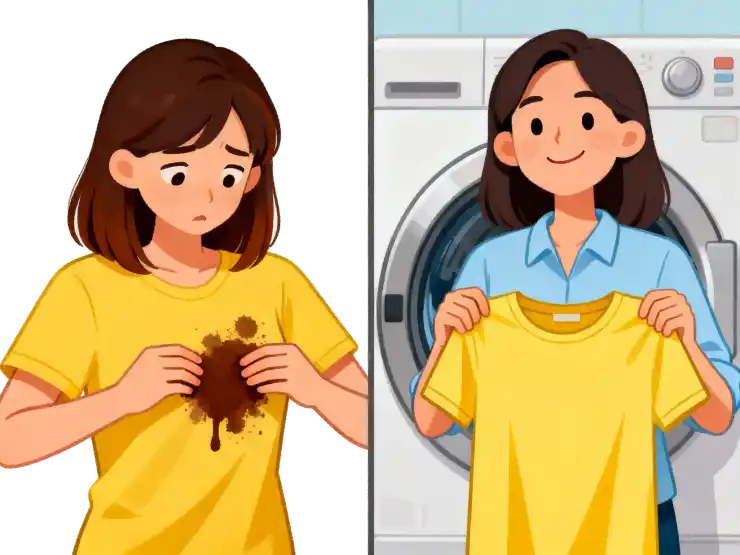
However, better hygiene can make teeth appear brighter if:
- stains are superficial
- tartar is present
- plaque is thick
Professional cleaning removes tartar — something brushing cannot do.
That alone can improve appearance.
But if your teeth are naturally yellow?
You can brush perfectly for 20 years — color won’t change.
And please: don’t stop brushing just because color doesn’t change!
That’s like stopping oil changes because the car isn’t faster.
Brushing is for:
- cavity prevention
- gum health
- avoiding root canals
- avoiding crowns (read Do You Need a Dental Crown? )
Not whitening.
Also: mouthwash doesn’t whiten.
It mostly perfumes your breath and nukes your microbiome, and you don’t want that.
How to fix yellow teeth 🛠️
If color truly bothers you, here are your real options:
Step 1 — Clean first
Whitening over plaque = wasted effort.
The areas where plaque and tartar sit will not whiten.
Professional cleaning removes:
- tartar
- heavy stains
- biofilm
You don’t paint before cleaning the wall.
Step 2 — Evaluate restorations
Whitening doesn’t work on:
- fillings
- crowns
- veneers

So you can end up with:
white tooth + yellow filling = 🦓 zebra pattern.
If unsure, a good dentist should explain this.
(And yes, choosing one matters — see How to Find a Good Dentist: 10 Trustworthy Signs )
Step 3 — Whitening options
• In-office whitening
• Custom trays
• Dentist-supervised home kits
All use peroxide-based systems.
They work best on:
- natural teeth
- yellow tones (better than gray)
Step 4 — Advanced cosmetic options (last resort)
• Veneers
• Crowns
• Bonding
These are invasive and expensive.
Grinding healthy teeth just for color is… questionable.
If you already need restoration — fine.
If teeth are healthy — think twice.
Health first. Cosmetics second.
How to prevent the stains 🛡️
You can’t eliminate stains. You can reduce them.
No matter if you decide for whitening or not, these habits will help keep your smile stain free.
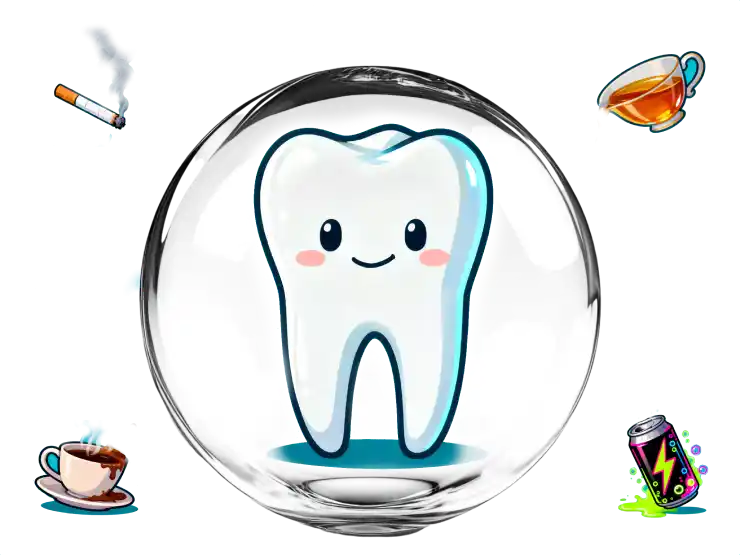
Basic habits:
- Brush twice daily
- Interdental cleaning (dental floss, water pick, interdental brushes)
- Rinse after coffee, acidic drinks, or smoking
- Don’t sip acidic drinks slowly
- Regular professional cleanings (when needed)
Helpful extras:
- Hydroxyapatite toothpaste — makes the enamel smooth, stains can’t grab on as easily.
- Magnesium supplements — among many benefits, it can help saliva quality, where saliva is your natural defense against stains and other problems.
- Avoid abrasive charcoal toothpaste
- Avoid lemon DIY hacks
Saliva is your natural defense.
Dry mouth = more staining.
When yellow teeth are a health signal (not just cosmetic) 🔍 🧠
Most yellow teeth are a cosmetic issue. Some aren’t.
Your dentist looks at color differently than you do. A specific shade change, in a specific location, tells a story.
Yellow-gray or darkening on a single tooth — not the whole mouth, just one — usually means the tooth is dying. The blood supply inside was disrupted: trauma, a deep crack, a long-standing infection. The pulp breaks down from the inside and the tooth changes color from within. This isn’t fixable with whitening. It needs diagnosis.
Chalky white spots with yellow-brown edges — often fluorosis (too much fluoride during early childhood) or hypomineralization. Hypomineralized molars and incisors are increasingly common and look mottled, patchy, or yellowish at the edges. They’re also structurally weaker than normal enamel and more cavity-prone. Cosmetic whitening doesn’t help. A dentist needs to assess and potentially protect them.
Sudden, rapid yellowing across multiple teeth in an adult — enamel erosion. Usually from acid reflux disease (GERD) that the person doesn’t even know they have, or from a highly acidic diet. The enamel dissolves, dentin becomes visible at the incisal edges, and teeth start looking yellower and shorter. This is both a cosmetic and a structural problem, and the underlying cause needs treating first.
Yellow-brown staining at the gumline specifically — often tartar, which is fine — a cleaning will resolve it. But if it’s discoloration within the tooth structure at the gumline, it can indicate early decay in a difficult-to-see location.
The pattern matters. A uniformly yellow mouth is almost always genetics and diet.
A localized, changing, or asymmetric discoloration is a flag.
If something changed — color you didn’t notice a year ago, a single tooth going darker, edges becoming translucent — that’s worth a check.
Not a panic. A check.
The bigger picture: color vs. health
People obsess over yellow teeth.
That is ok, but only if you have resolved other bigger issues in your mouth first.
Such as:
- bleeding gums
- tooth decay
- sensitivity
- recurring ulcers
- viral lesions
Color is more visible to the outside world.
But general oral health is more visible to your inner body world — your overall health and well-being.
Healthy, slightly yellow teeth > artificially white, damaged teeth.
Bottom line 🎯 🎯
Yellow teeth do not automatically mean poor hygiene.
They can simply reflect your natural anatomy.
You can:
- whiten them
- reduce stains
- improve brightness
But you cannot change genetics without invasive procedures.
So choose your priority:
- perfection
- or health
Ideally — both, but never sacrifice health for shade.
If your teeth are strong, pain-free, and stable — you’re winning.
And if you decide to whiten?
That’s fine too.
Just do it informed, conservatively, and after cleaning is established.
Most importantly:
Keep them healthy.
Because decay-gray has never been trendy.
And don’t forget to laugh out loud regardless of the color 🍀
🦷 Part of our Adult Oral Health Guide
This article is part of our Adult Oral Health Guide that connects all related topics so you can understand the bigger picture — not just the color.
Related Reads 🔗 🔗
If you’re building your oral health foundation, start here:
- Adult Oral Health
- Kids Dental Health
- Why Does My Tooth Hurt on Cold Water
- Why Do My Gums Bleed When I Brush My Teeth
- How to Find a Good Dentist: 10 Trustworthy Signs
- Do You Need a Dental Crown
- Canker Sores vs Cold Sores
FAQ: Yellow Teeth in Adults: Real Answers ❓
Can yellow teeth be white again?
Why are my teeth yellow even though I brush?
Are yellowish teeth healthy?
Do teeth go yellow with age?
Can brushing remove yellow?
Is it too late to fix yellow teeth?
What color cancels yellow teeth?
Can whitening toothpaste help?
Do yellow teeth mean poor hygiene?
What is the healthiest color of teeth?
Why are my teeth yellow at 17?
Can I scrape yellow off my teeth?
Do teeth permanently stay yellow?
How often should I whiten teeth?
What foods cause yellow teeth?
Can fluoride make teeth yellow?
Are yellow teeth a turn off?
How to whiten teeth in 7 days?
How can I whiten my teeth naturally?
Is it normal to have yellow teeth?
When should I worry about yellow teeth?
About the Author: DMD Alexander K.
Doctor of Dental Medicine with clinical experience treating adults and children. This site focuses on practical prevention, symptom education, and helping patients make informed decisions.
Learn more on the About page.